
I made risk remediation easy to do right, and cut a 20-minute spreadsheet task to under 2.
Goal: help small businesses remediate the risks their cyber assessments find, without dumbing down the cybersecurity risk science.
Task: I pulled the risk remediation function out of a crowded assessment platform into one clear add-on module, where a single dial and actionable dashboard show which risks to fix first.
*Drag the center divider to compare a 20-minute spreadsheet process with the one workflow that replaced it
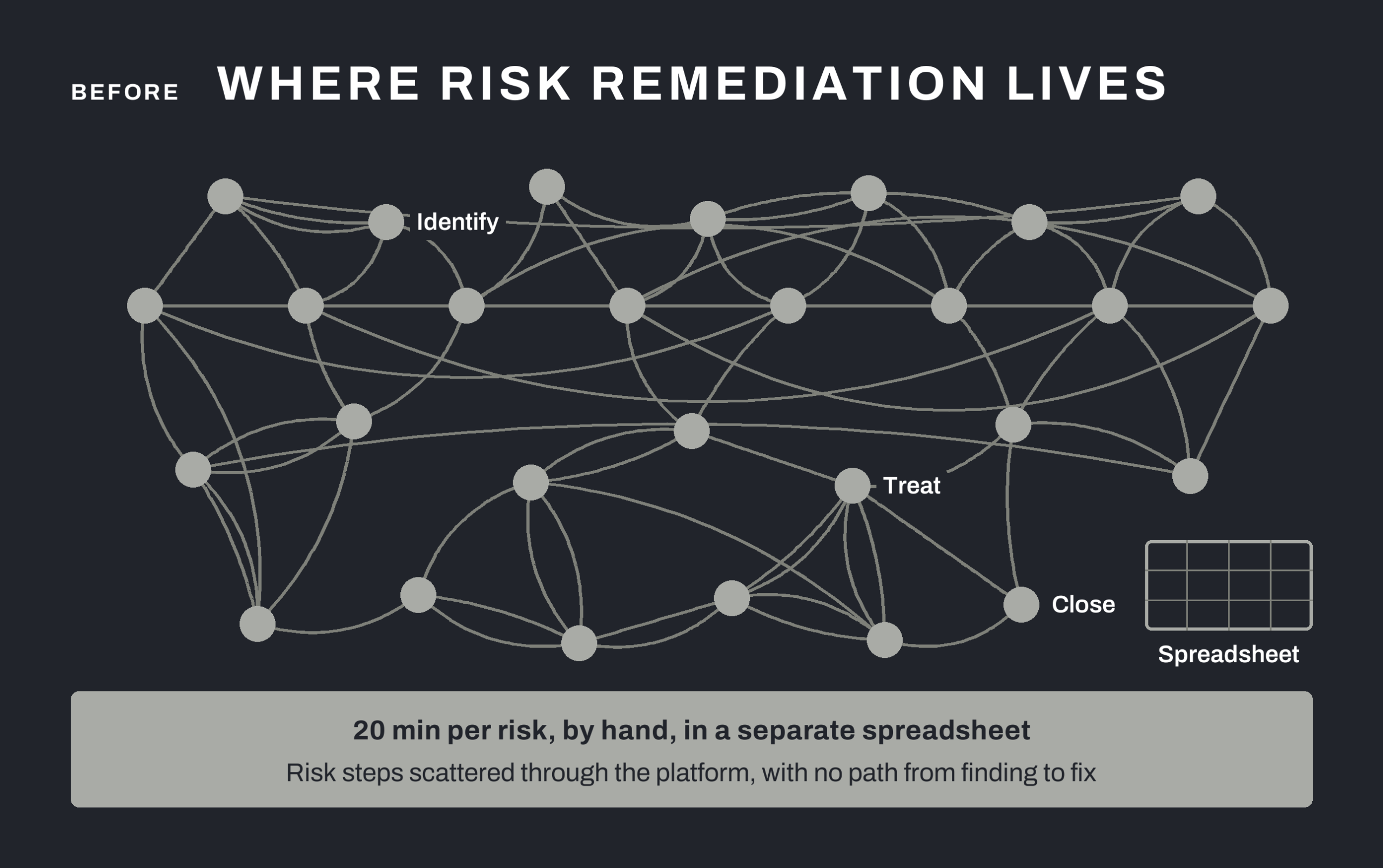
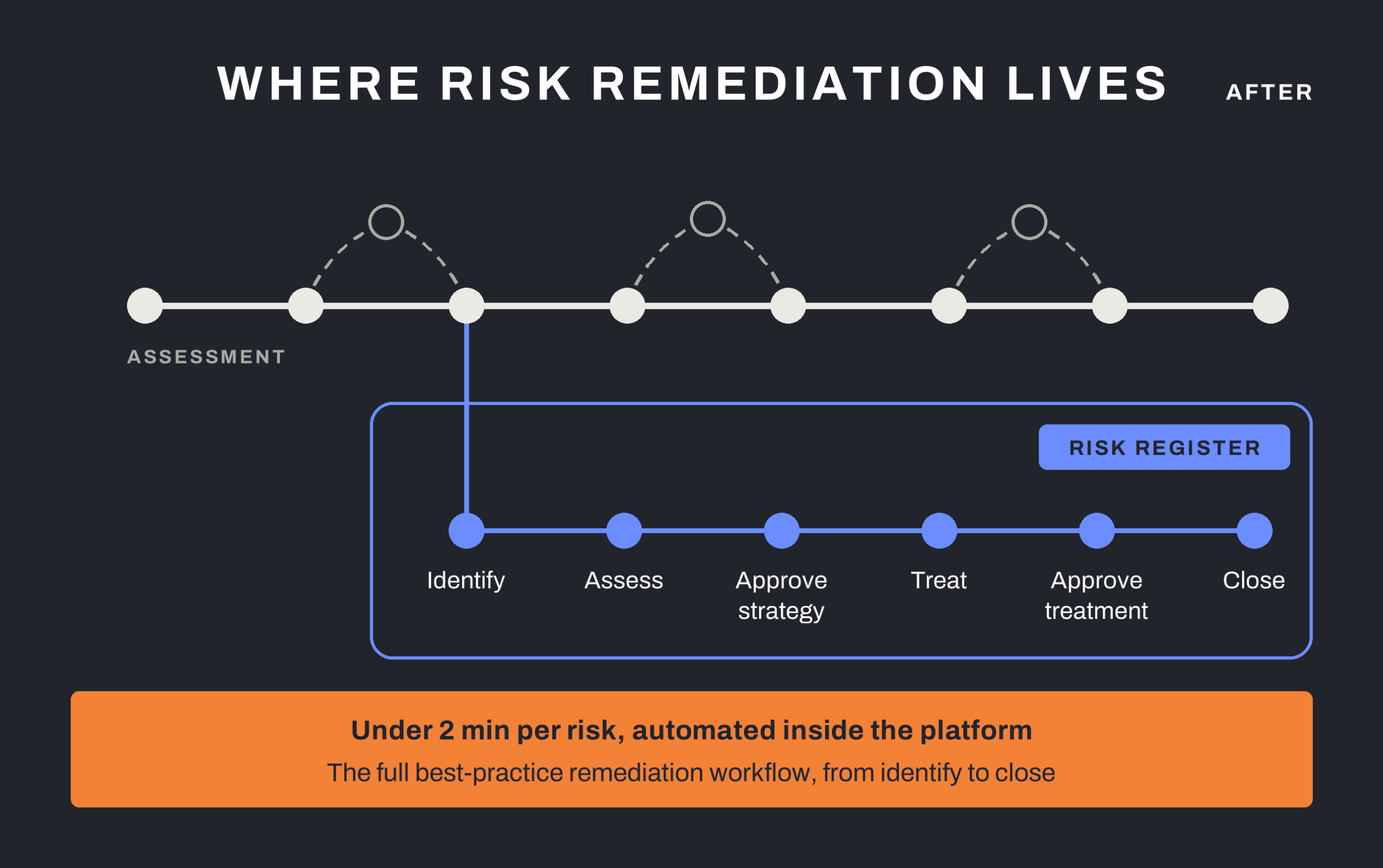
Under 2 Min
The same risk process took 20 minutes in a external spreadsheet
88% Task Success
Users added, remediated, and approved a risk (best-practice workflow)
80% Adoption
A majority of beta-invited clients signed up and used it
~$400K New ARR
Opened a new SMB market, still earning in 2026
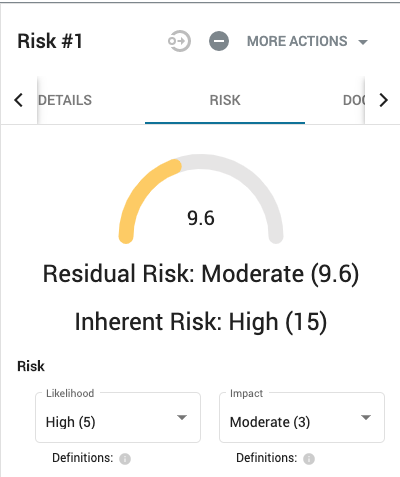
There’s a complex algorithm for how risk criticality is assessed. This sidepanel makes that criticality visually clear.
Project Summary:
- The Ask: give SMB clients a way to remediate the risks their assessments found.
- The Problem: remediation is complex by nature and the main platform was especially cluttered, offering every option at once.
- The System Fix: Create a separate workflow, an elegant add-on with one combined risk score, clear fields, and the full best-practice remediation workflow built in.
- The Output: the Risk Register, plus the patterns and acceptance criteria the next module reused.
- The Outcomes: under 2 minutes | 80% adoption | live and earning in 2026
Company Context:
Coalfire certifies whether other companies meet cybersecurity and compliance standards.
- A multi-sided platform: (external) professional security personnel, (external) SMB business users, (internal) assessors
- One expert-grade platform: 14 assessment types, 48 frameworks, 920 evidence items
- Core platform built for enterprise assessors; modular add-on now selling to small and mid-size businesses (SMBs)
- Risk Register Team: 3×3. 1 Product Manager, 1 Product Owner, me as sole UX, and 3 dev sub-teams (I also managed the CoalfireOne core platform team)
General stats: ~650 employees, ~$125M revenue, ~2000
Sample Screens:
*Click each picture to see a lighbox of this asset
Problem: the platform overwhelmed novice clients, who left risks unremediated
Operating Context: Lead UX on a 3×3 team, with three dev sub-teams in Colombia. Three months. No research program existed before this. The platform and company was developer-led.
Remediation That Can't Get Simpler
- Every risk scored on six manually-set criteria with a complicated algorithm to determine a final score
- Best practices (necessary to pass an assessment) required a complex workflow, an approved plan and a confirmed fix for each one
A Platform With Every Option at Once
- 14 assessment types, 48 frameworks, 16 features
- Every option existed all at once, with little information architecture or design patterns to help usability
Real Stakes When Risks Sit Unremediated
- Exploited flaws were in 20% of breaches in 2025
- 19% of SMBs face bankruptcy after an attack
We were keeping the company risk lists in personal spreadsheets: easily lost, not transparent to the business, often fragmented and duplicated ...and certainly not very actionable!
- A SMB client, on the old way
*Drag the center divider left or right: company risk in a personal spreadsheet, and the Risk Register that replaced it


The easy failure was giving all out clients a spreadsheet list that showed every field and status at once across a row. It would have been accurate… but completely unusable for a naive SMB owner with no risk training. The other failure was cutting the scoring and approvals so it was simple… but then risks would get logged and never remediated, so our client fails the next assessment.
Why me: I taught physics and math way before I was a designer. When people struggle, I look at the /conditions/ first. These users weren’t failing at risk: the tool was asking them to already be experts, which they were not. THAT problem was mine to surface and fix.
Playbook: Isolate the risk workflow and make every step and decision clear
What I Did
- Moved remediation off the main CoalfireOne assessment platform and made it an add-on module
- Kept all the best practices, but made the choices clear
- Turned six ratings + algorithm into one auto-calculated visual gauge
- Labeled every field in the user’s words
- Built the remediation workflow compliance requires
- Tested with SMB beta users
Remove remediation from a complex assessment flow
SMB research showed remediation was best practice to be done /after/an assessment. So we made the Risk Register its own workflow and it became an add-on module, not another tab in the main CoalfireOne platform. This meant SMB clients could act on risk without navigating the whole platform.
One Visual Score, Not Six Ratings in a Spreadsheet Row
A heat gauge combines each risk’s six ratings into one score, and dashboards rank the most critical risks first. Owners needed to know what to fix first, not read six numbers per risk.
We used iterative testing to assure that the functionality and comprehension were clear and usable
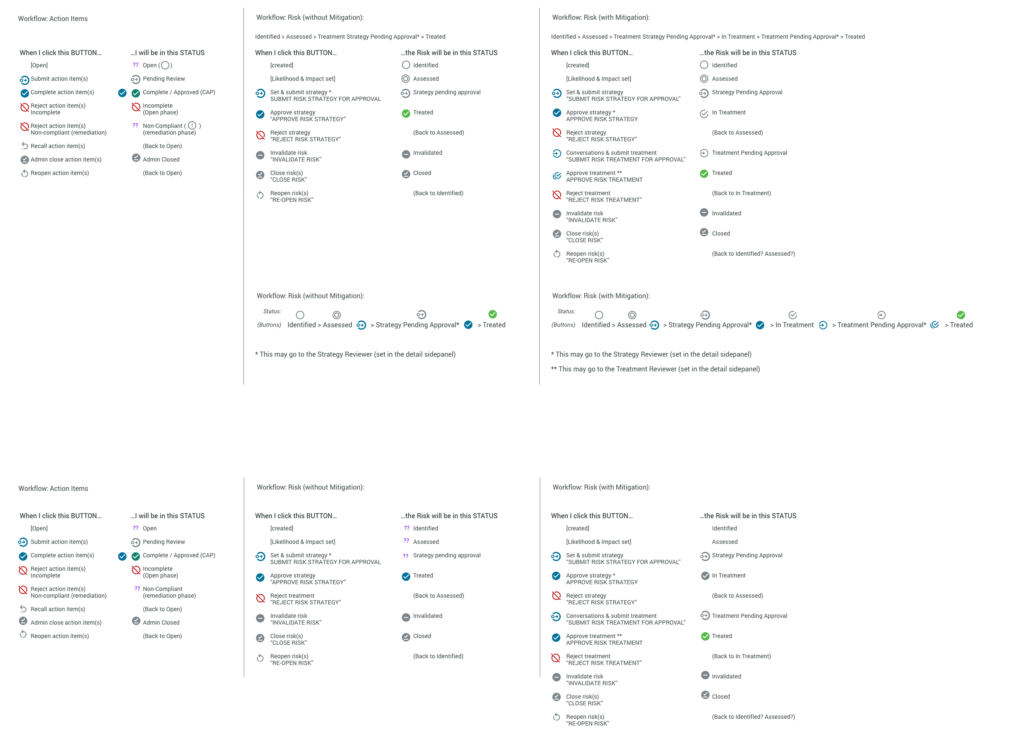
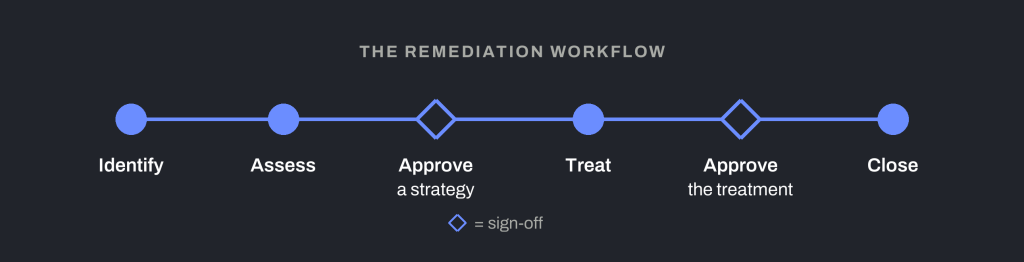
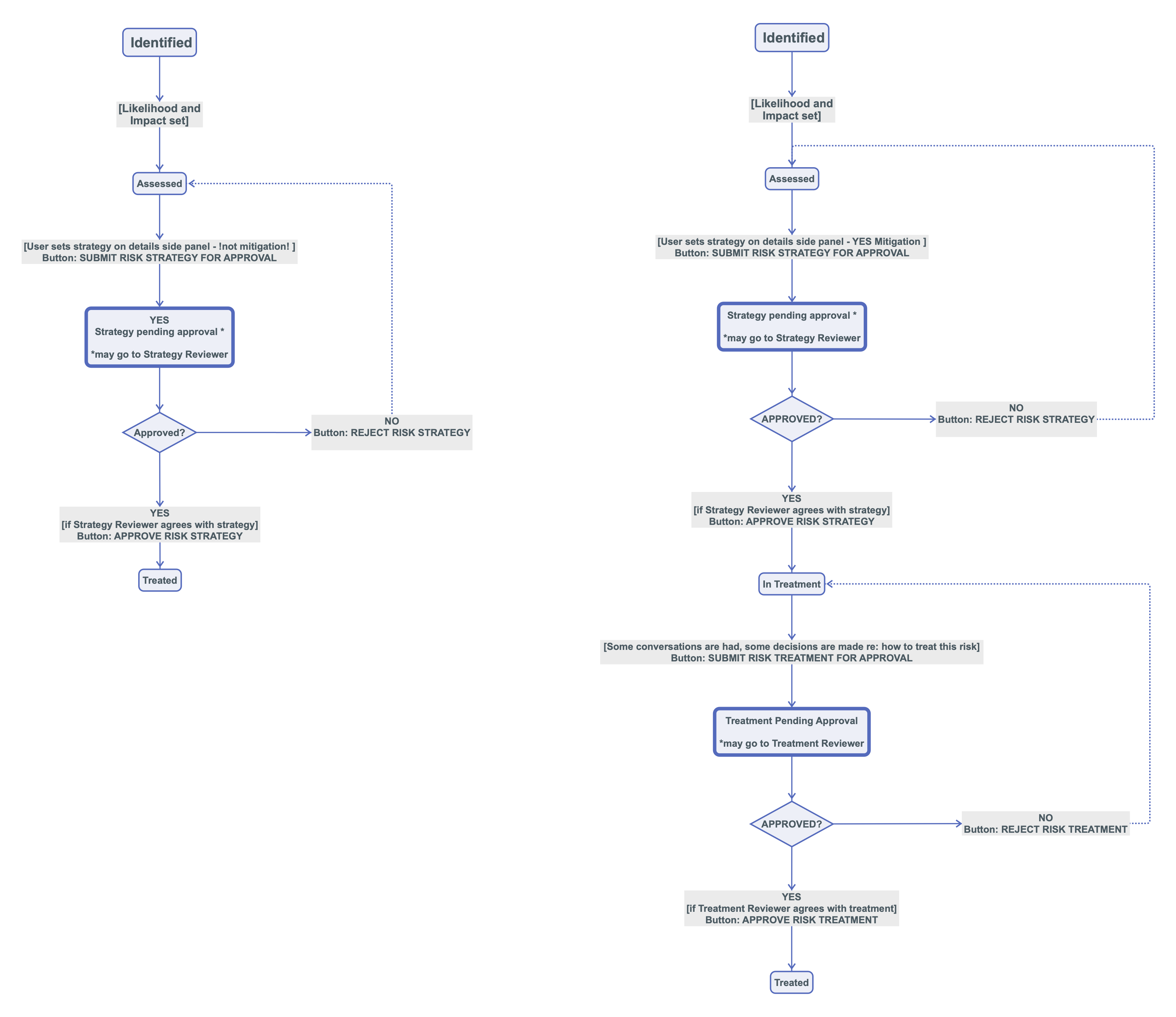
The Full Workflow, Not Open -> Close
Risk assessment is a /workflow/, not a one-click “done,” because certification and compliance require an approved plan and a confirmed fix, and internal company departments involved have to agree on both. Every department sees the same risk, score, and status.
Every Field in the User's Words
One side panel per risk, clear labels, icon and color. Scoring definitions in place and easy to find the definitions using the “i” next to each field.
Smart defaults and a guided walkthrough on demand, so a SMB risk owner who wasn’t an expert didn’t have to become one.
The remediation workflow can’t be simplified – but it can be CLEAR
What did people to give up, in order to make this change?
- Our SMEs. Gave up mandating a process to SMB users (who contradicted it).
- The dev teams. Gave up ad hoc UI elements in favor of shared patterns and acceptance criteria.
- Product. Took on a module to price and support separate from the core CoalfireOne platform
I started by leading design for the core platform first. The platform mixed the main path with every other option an expert might need, which made it confusing and hard to use. I mapped the ‘happy path’ assessment workflow, separated the main path from the alternate paths, made the main path the most visible thing on screen, and moved secondary and tertiary functions into other interaction patterns.
For each type of certification, I built templates. Assessment data is hard to find and record, and it has to be perfect, in the right form, in the right place. A template didn’t make that simpler, but it made clear what was needed and it what form. A naive client could fill it in and upload it, and the platform filed it correctly. Later we created connectors from many enterprise apps to help get the data into our system.
That research, on the assessment happy paths, is what showed me remediation was a side path for SMB clients, and could make more revenue as an add-on module.
Results: 80% of invited clients adopted it, and 88% finished a critical workflow path in under 2 minutes.
Outputs:
The Risk Register add-on module, shipped in 3 months and under budget
Intuitive and highly visual design aided usability
Pattern library and acceptance-criteria templates we used when creating the next add-on module
Outcomes:
A 20-minute task cut to under 2
88% task success, 80% adoption, 75% positive sentiment
A new SMB market and pricing model, ~$400K new ARR, still earning
UX Outcomes
- By turning six ratings into a visual score, we assured that non-expert owners could see and remediate their most critical risks first.
- By moving risk from personal spreadsheets into the platform’s data flow, we made each client’s risk visible across their own business and connected into the next assessment
Current Status (a/o 2026)
- Live and still earning revenue in Coalfire’s platform.
- The core platform work I led is the basis of today’s platform, Compliance Essentials.
- Featured in a 2024 third-party report.
Lesson: our experts saw everything possible as 'the whole job', so now I research with actual users to understand what functionality is core, secondary, and tertiary.
Lesson:
What did I get wrong here, and where did I fix it?
Mistake: Let experts define what was core
For our expert assessors, every functionality involved with assessments was the whole job. For SMB clients, remediation was a side path that happened after their assessment was over (and before the next assessment)
Researching with experts is a fine first step…but they weren’t our customer, and their necessary tasks didn’t survive SMB clients.
The Fix: Test what's core with the user
It’s ok to run discovery with whoever you can reach as a first pass – but absolutely research with the actual users.
How I applied this to the next project: on FeatureB at Pluralsight, design built a proof of concept for a feature that an executive was passionate about. We tested it with sales, to much acclaim and enthusiasm. But when we tested it with 7 core users, this potential feature required capabilities that not one company had.
How I knew it worked: If we had made that feature, few companies would have used it. We reached Do Not Proceed on FeatureB before any money, engineers, or extra resources were spent, allowing the teams to work on truly valuable work instead.
Skye’s Protip:
In 2020 the question I kept asking was “how could we make the right thing to do easier?” For SMB clients, the answer was to separate the workflows. Many things in an enterprise product can’t be made more simple without losing what customers pay for… but it’s often possible for us to make things more clear.
Project Information
Turning complexity into clarity
Turning a complex cybersecurity risk workflow into one intuitive experience. The Proof: a 20-minute task cut to under 2 minutes.
-
Design
2020. Three months, discovery to production, under budget.
-
Client
Coalfire Cybersecurity. B2B SaaS plus professional services, security compliance and assessment. PE-owned.
-
My Role Then
Director of UX and Product Design. Led the core platform work, sole UX on the Risk Register, and founder of the company's design department.
-
Scope & Span
One new add-on module inside CoalfireOne, for the SMB segment, on a platform of 14 assessment types and 48 frameworks. Desktop and tablet.
-
Team & Reach
3x3. 1 PM, 1 PO, me, and 3 dev sub-teams of 5 to 7 developers in Colombia.
-
Platform Type
SMB B2B SaaS, compliance and assessment, expert and non-expert users in the same product
-
Status (a/o 2026)
Live and still earning. CoalfireOne has become Compliance Essentials, a modular GRC product.
-
Tags
Change Management, Decision Frameworks, Platform Coherence, Transformation, User Validation Testing